Concrete Piles
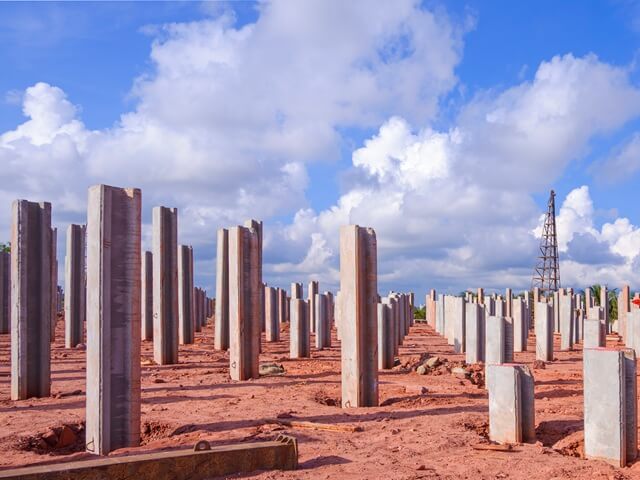
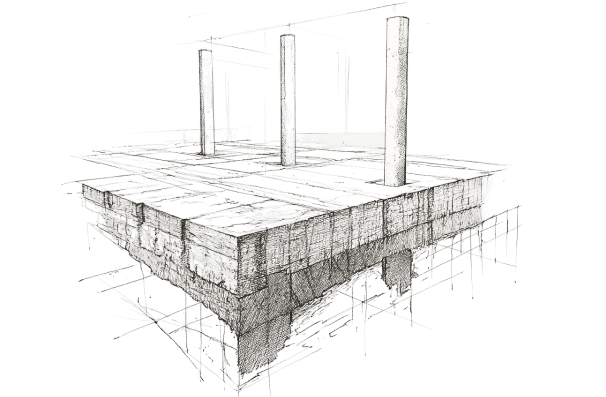
Concrete piles are a popular choice for projects that require substantial load-bearing capacity and long-term durability. They can be installed as precast driven piles or constructed on-site using cast-in-place methods.
Types of Concrete Piles:
Precast Driven Concrete Piles
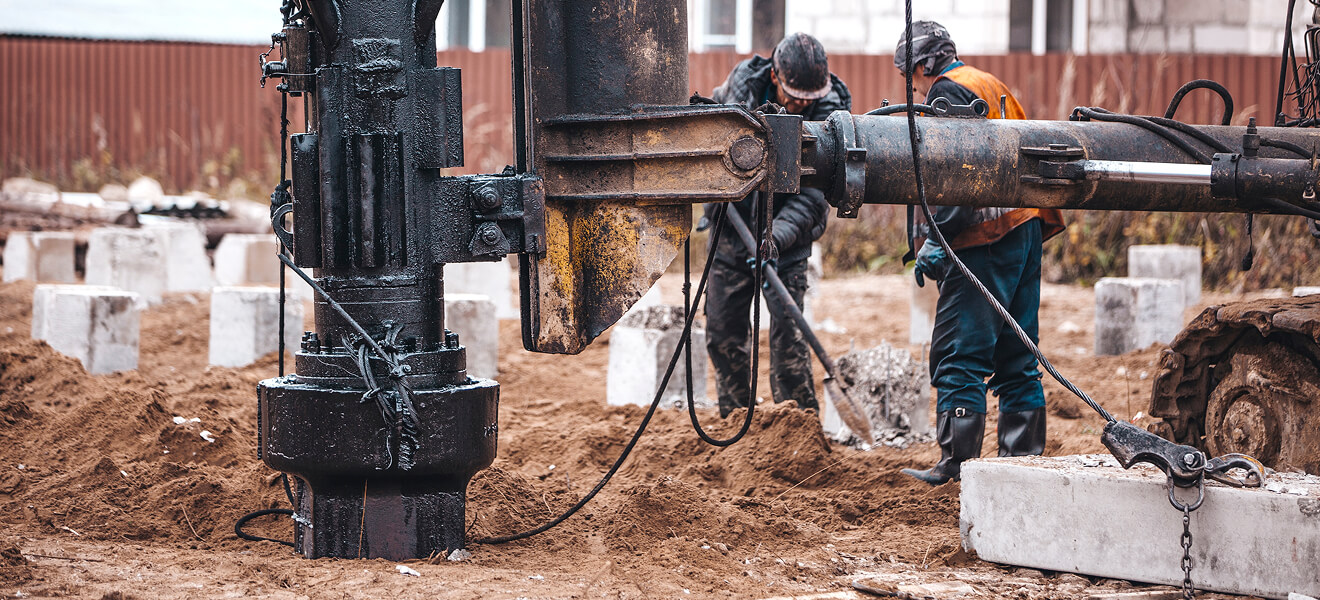
Precast concrete piles are manufactured before they arrive at the construction site and then driven into the ground using specialized pile driving equipment. Because they are produced in controlled conditions, their quality and dimensions can be carefully monitored before installation.
Cast-in-Place Concrete Piles
Cast-in-place piles, also known as bored or drilled piles, are constructed at the project site. A hole is drilled or bored into the ground, reinforcement is installed when required, and concrete is placed into the prepared shaft.
The appropriate method depends on soil conditions, structural requirements, access, and the project’s engineering design.
Advantages of Concrete Piles
Concrete piles offer several important benefits:
- High load capacity: They can support substantial axial and lateral loads, making them suitable for demanding structures.
- Long service life: Properly designed and installed concrete piles can provide a service life of 50–100 years or more.
- Excellent for marine and heavy structures: Concrete piles are well suited for bridges, marine facilities, and large structures where significant loads must be transferred into the ground.
- Corrosion resistance: Concrete provides good protection for reinforcement when the pile is properly designed for the environmental conditions.
- Good performance in high groundwater areas: Concrete piles can perform effectively in sites with high water tables when properly designed and installed.
Disadvantages of Concrete Piles
Concrete piles also have some limitations:
- Heavy weight: Precast concrete piles are heavy, which can increase transportation and handling costs.
- Potential for cracking during driving: Precast piles can be damaged if driving stresses are not properly controlled.
- Longer installation time: Cast-in-place piles require drilling, reinforcement placement, and concrete placement before the foundation is ready.
- Higher mobilization costs: Concrete pile projects may require larger equipment and more extensive site preparation.
Best For
Concrete piles are commonly considered for:
- Bridges
- High-rise buildings
- Marine structures
- Heavy industrial projects
- Large commercial developments
Timber Piles

Timber piles have been used as deep foundation elements for generations and remain a practical solution for many residential and marine construction projects.
At Bay Area Pile Driving, we use .80 CCA-treated Yellow Pine for applicable timber piling projects. CCA treatment helps protect the wood against decay and deterioration in demanding environments.
Advantages of Timber Piles
One of the biggest benefits of timber piling is its relatively low material cost compared with some other foundation systems.
Other advantages include:
- Lower material cost: Timber can be a cost-effective choice for projects with moderate foundation loads.
- Easy to handle: Timber piles are lighter than precast concrete piles and can be relatively easy to cut, transport, and handle on-site.
- Good performance below the groundwater table: Permanently saturated timber can perform well because the low-oxygen environment limits the biological processes responsible for decay.
- Renewable material: Wood is a renewable resource, making timber an attractive option for certain projects where material sustainability is a consideration.
Disadvantages of Timber Piles
Timber piles are not suitable for every application. Their limitations include:
- Lower load capacity: Timber piles generally have lower load capacities than large concrete piles and some steel pile systems.
- Vulnerability to decay above the water table: Timber can deteriorate when exposed to conditions that allow decay organisms to remain active, particularly where moisture and oxygen levels
- fluctuate.
- Potentially shorter service life: Depending on soil, groundwater, exposure, treatment, and site conditions, timber may have a shorter service life than properly designed concrete or steel foundation systems.
Proper installation and environmental conditions are important factors when determining whether timber piling is appropriate for a project.
Best For
Timber piles are commonly used for:
- Residential foundations
- Waterfront homes
- Boardwalks
- Docks and piers
- Lighter structures
- Certain marine construction projects
Helical Piles
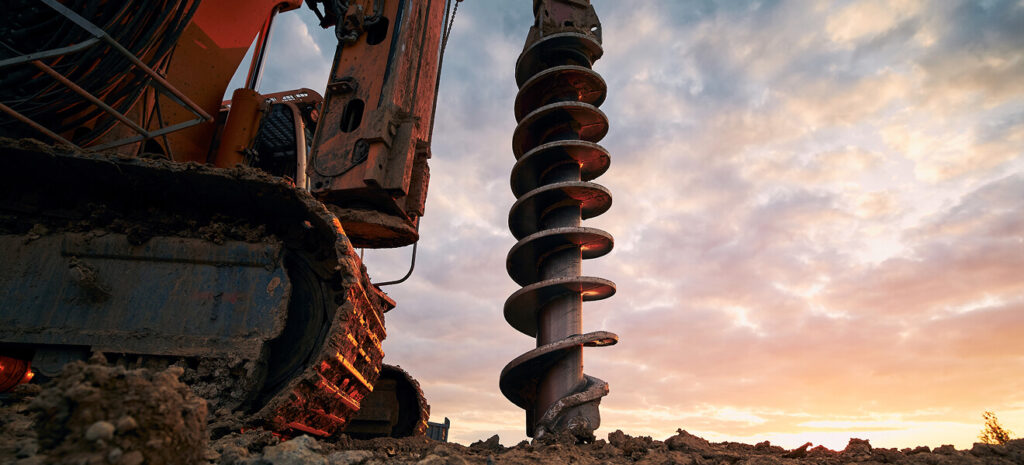
Helical piles, also called screw piles, are steel foundation elements with helical plates attached to the shaft. Instead of being driven into the ground with an impact hammer, they are rotated into the soil using specialized hydraulic equipment.
As the pile is installed, the helical plates engage with the surrounding soil and provide resistance against the loads imposed by the structure.
Advantages of Helical Piles
Helical piles offer several advantages, particularly where installation speed and limited site disturbance are important:
- Fast installation: Installation can often be completed quickly compared with some conventional foundation methods.
- Minimal vibration: Because helical piles are rotated into the soil rather than driven with an impact hammer, installation produces very little vibration.
- Immediate load capacity: Unlike cast-in-place concrete, helical piles do not require a curing period before they can be loaded, subject to the engineer’s design and installation requirements.
- Removable and reusable: In certain applications, helical piles can be removed and potentially reused.
- Ideal for restricted access sites: Their equipment requirements can make them useful where larger pile driving equipment cannot easily access the site.
Disadvantages of Helical Piles
Helical piles also have limitations that need to be considered during foundation design:
- Steel corrosion risk: Steel components require appropriate corrosion protection based on the soil and environmental conditions.
- Limited in very dense or rocky soils: Installation can become difficult where hard layers, rock, or obstructions prevent the helices from advancing to the required depth.
- Moderate load capacity: They may not be appropriate for projects requiring the very high capacities achievable with large concrete or other heavy-duty pile systems.
- Requires torque monitoring: Installation torque must be monitored using appropriate equipment to help verify that the pile has achieved the required installation criteria.
Best For
Helical piles are commonly used for:
- Residential additions
- Foundation underpinning
- Solar foundations
- Light commercial structures
- Elevated homes in flood-prone areas
- Projects with restricted site access
Concrete vs. Timber vs. Helical Piles: How Do You Choose?
There is no universally “best” pile type. The right choice depends on the conditions and requirements of the specific project.
When comparing concrete, timber, and helical piles, engineers and contractors typically consider:
- Soil conditions
- Required load capacity
- Lateral and axial loads
- Groundwater levels
- Flood and coastal conditions
- Expected service life
- Site accessibility
- Installation equipment
- Vibration restrictions
- Project budget
- Construction schedule
For example, a large commercial or marine structure with significant structural loads may require the capacity and durability of concrete piles. A residential waterfront project with moderate loads may be well suited to timber piling. A smaller project in a restricted-access area may benefit from the fast, low-vibration installation of helical piles.
The final selection should always be based on site-specific geotechnical information and structural engineering requirements.
Which Pile Type Is Best for Florida Construction?
Florida construction presents some unique foundation challenges. Coastal and waterfront properties can involve sandy soils, high groundwater levels, flooding, storm exposure, and saltwater environments.
Because of these conditions, pile selection needs to take both structural and environmental factors into account.
Timber piles can be an effective solution for many residential and waterfront projects, particularly when the loads are moderate and site conditions are suitable.
Concrete piles are often preferred when higher load capacity, durability, and long-term performance are required for heavy structures.
Helical piles can be particularly useful for residential additions, underpinning, elevated structures, and projects where access or vibration is a concern.
There is no one-size-fits-all solution. A proper site evaluation and engineering analysis should determine which foundation system is appropriate.
Final Thoughts
Concrete, timber, and helical piles can all provide reliable deep foundation support, but they are designed for different applications.
Concrete piles offer high load capacity and long-term durability for demanding projects. Timber piles provide a practical and cost-effective option for many residential and marine applications. Helical piles offer fast, low-vibration installation and can be particularly useful for restricted-access sites and lighter structures.
The best foundation system depends on your soil conditions, structural requirements, site limitations, and project goals.
At Bay Area Pile Driving, we can help contractors, developers, and property owners understand their foundation options and determine the most appropriate pile driving solution for their project.
If you’re planning a residential, commercial, or marine construction project in Florida, contact us to discuss your foundation requirements.