

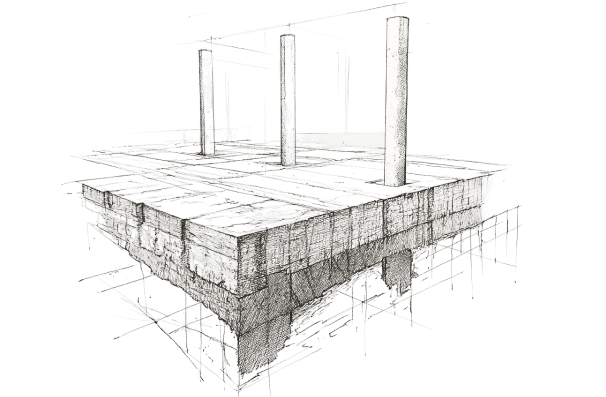
Once pile installation is complete, several important post-pile driving procedures must be carried out to verify structural integrity, confirm load capacity, and prepare the foundation system for the next stage of construction. These services ensure that every pile performs according to design specifications and meets engineering and safety standards.
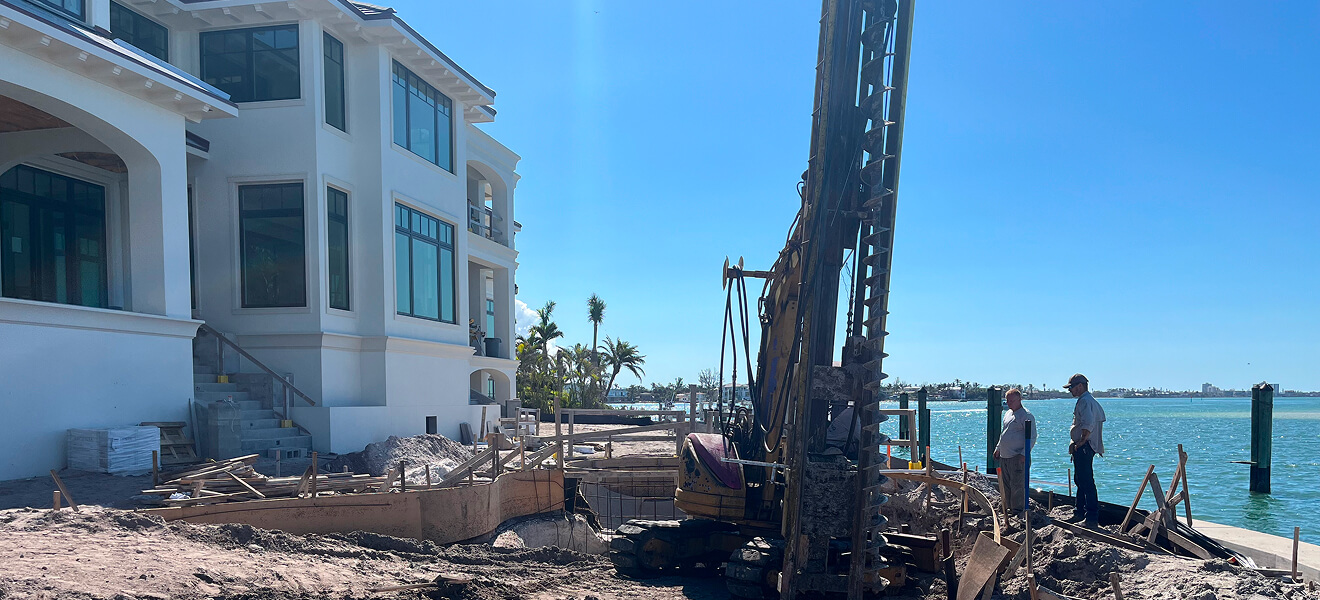
Post Pile Driving Phases & Services
Below are the key phases that take place after pile driving operations are finished. You can read more about pre-pile driving activities here.
Pile Integrity Testing (PIT)
Pile Integrity Testing (PIT) is performed to evaluate the condition of installed piles and identify potential defects that may affect structural performance.
This process helps detect:
- Cracks
- Voids
- Necking
- Other structural defects within the pile
PIT is commonly used for both bored piles and driven concrete piles. The test is typically conducted using a low-strain impact testing method, which analyzes wave reflections traveling through the pile shaft.
Purpose:
To confirm the structural integrity and continuity of the pile before construction continues.
Dynamic Load Testing
Dynamic Load Testing evaluates pile performance during installation using specialized instruments attached to the pile and hammer system.
This process measures:
- Stress levels during driving
- Pile capacity
- Hammer efficiency and energy transfer
One of the most common methods used is the Pile Driving Analyzer (PDA) system.
Dynamic testing provides fast and reliable data without requiring a full static load test, making it an efficient solution for many construction projects.
Purpose:
To verify pile load capacity and driving performance efficiently and accurately.
Static Load Testing
Static Load Testing is considered the most reliable method for confirming pile capacity and foundation performance.
During this procedure:
- Hydraulic jacks apply controlled loads to the pile
- Engineers measure settlement and load behavior
- Results are compared against design expectations
- Common Types of Static Load Tests:
- Compression load test
- Tension (uplift) test
- Lateral load test
Because it directly measures how the pile behaves under real loading conditions, static testing is often required for critical structures and large-scale projects.
Purpose:
To confirm the actual bearing capacity and structural performance of the pile foundation.
Cut-Off Level & Pile Head Treatment
After testing and installation are complete, piles must be prepared for integration with the structural foundation system.
This phase typically includes:
- Trimming piles to the required cut-off elevation
- Removing damaged or weak concrete from the pile head
- Exposing reinforcement bars for pile cap connection
- Repairing pile heads with high-strength grout if necessary
Proper pile head treatment ensures a strong and secure connection between the pile foundation and the structure above.
Purpose:
To prepare the pile for structural integration and load transfer.
As-Built Survey
An as-built survey is conducted after pile installation to verify that all piles were installed according to the approved engineering plans.
This process includes:
- Checking final pile positions
- Confirming verticality or batter angle
- Measuring deviations from design locations
Accurate surveying ensures that the installed foundation system aligns correctly with the structural layout of the project.
Purpose:
To confirm structural alignment and installation accuracy.
Load Capacity Confirmation & Reporting
The final stage involves reviewing all testing and installation data to confirm compliance with project requirements and engineering standards.
This phase includes:
- Comparing test results with design values
- Engineer review and approval
- Issuing compliance documentation and certificates
Detailed reporting provides assurance to contractors, consultants, and clients that the pile foundation system meets all required specifications.
Purpose:
To obtain final consultant and client approval for the foundation system.
Conclusion
Post pile driving phases are just as important as the installation itself. From integrity testing and load verification to surveying and reporting, each step plays a critical role in ensuring the safety, durability, and long-term performance of the foundation system.
Proper post-installation testing and quality control help identify issues early, reduce structural risks, and ensure the project is ready for the next stage of construction.